

Adnet, In Between
On the French furniture designer who never had to choose between rigour and romance

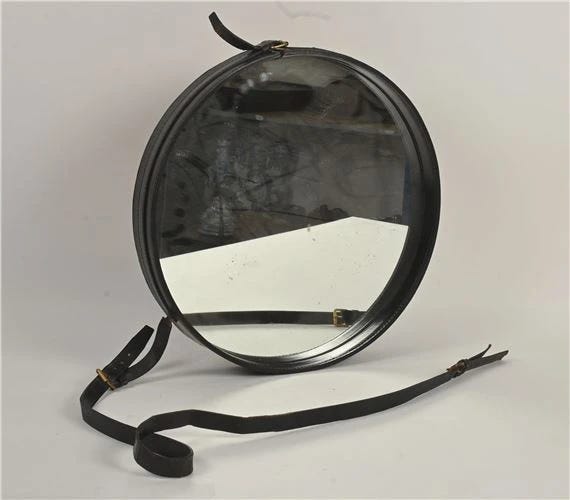
There is a particular quality that the best mid-century French furniture has, sense that it knows exactly what it is and has no interest in explaining itself. Jacques Adnet’s pieces have this quality more than almost anyone else’s. Each of his pieces arrives in a room fully formed, requiring nothing around it to justify its presence.
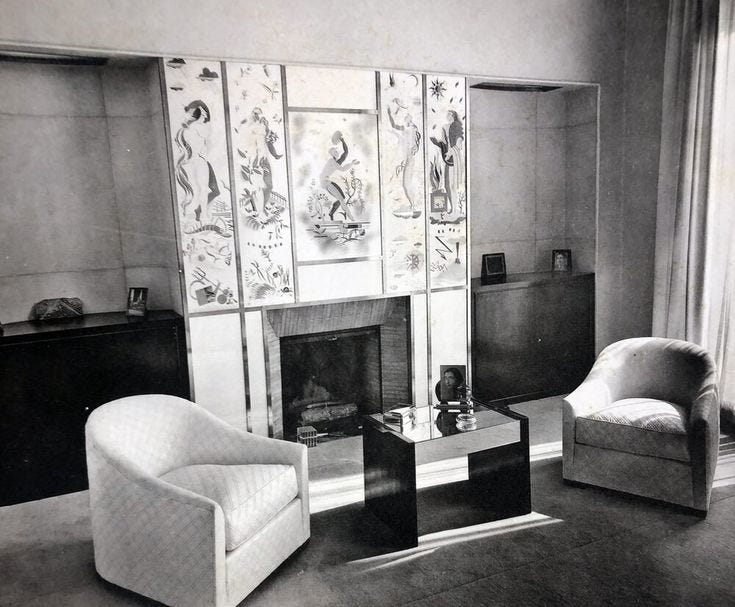
Adnet was born in Burgundy in 1900 and trained in Paris at the École des Arts Décoratifs, arriving into a design world in the middle of deciding what it wanted to be. Art Deco was at its height, ornate, expressive, unafraid of decoration, and modernism was just behind it, harder and more functional, stripping things back. Adnet moved between the two so naturally that the question almost didn’t apply to him. His forms were clean and geometric, rooted in function, but the materials were always considered, always sensuous. Parchment, sharkskin (galuchat), smoked glass, exotic wood. He understood that restraint and luxury were not opposites.
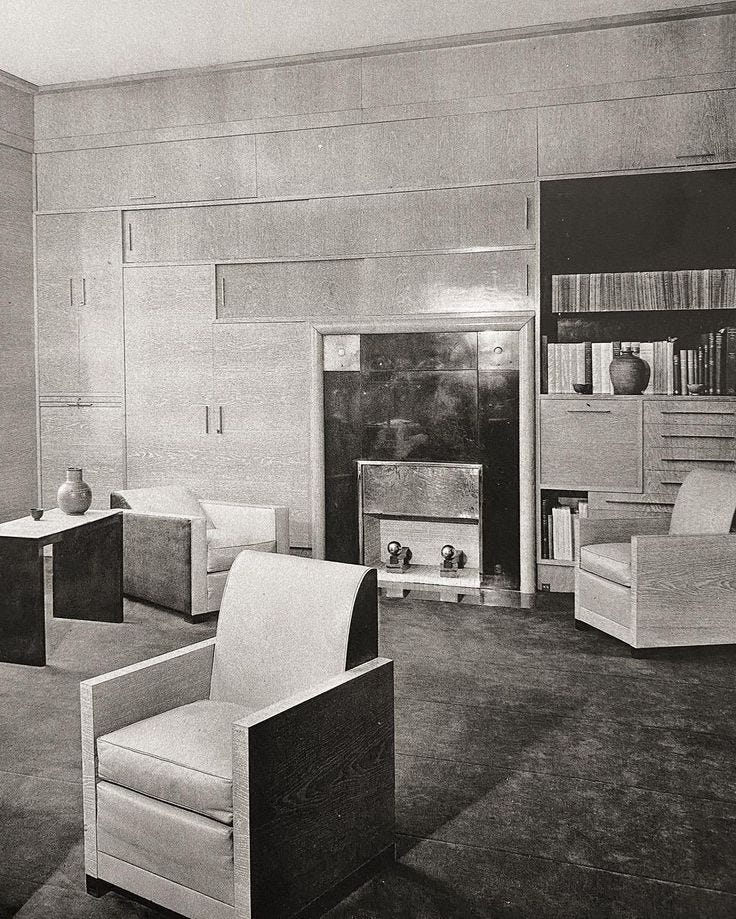
By 1928 he was director of La Compagnie des Arts Français, the decorative arts firm where he would spend the next three decades working alongside Charlotte Perriand, Georges Jouve, and others who shared his appetite for rigorous, beautiful things. The commissions that came in were impressive, the private apartments of President Auriol at the Palais de l’Élysée, interiors for UNESCO, rooms on luxury ocean liners. He was building interiors for people who understood that a well-made object and a well-made room were the same conversation conducted at different scales.
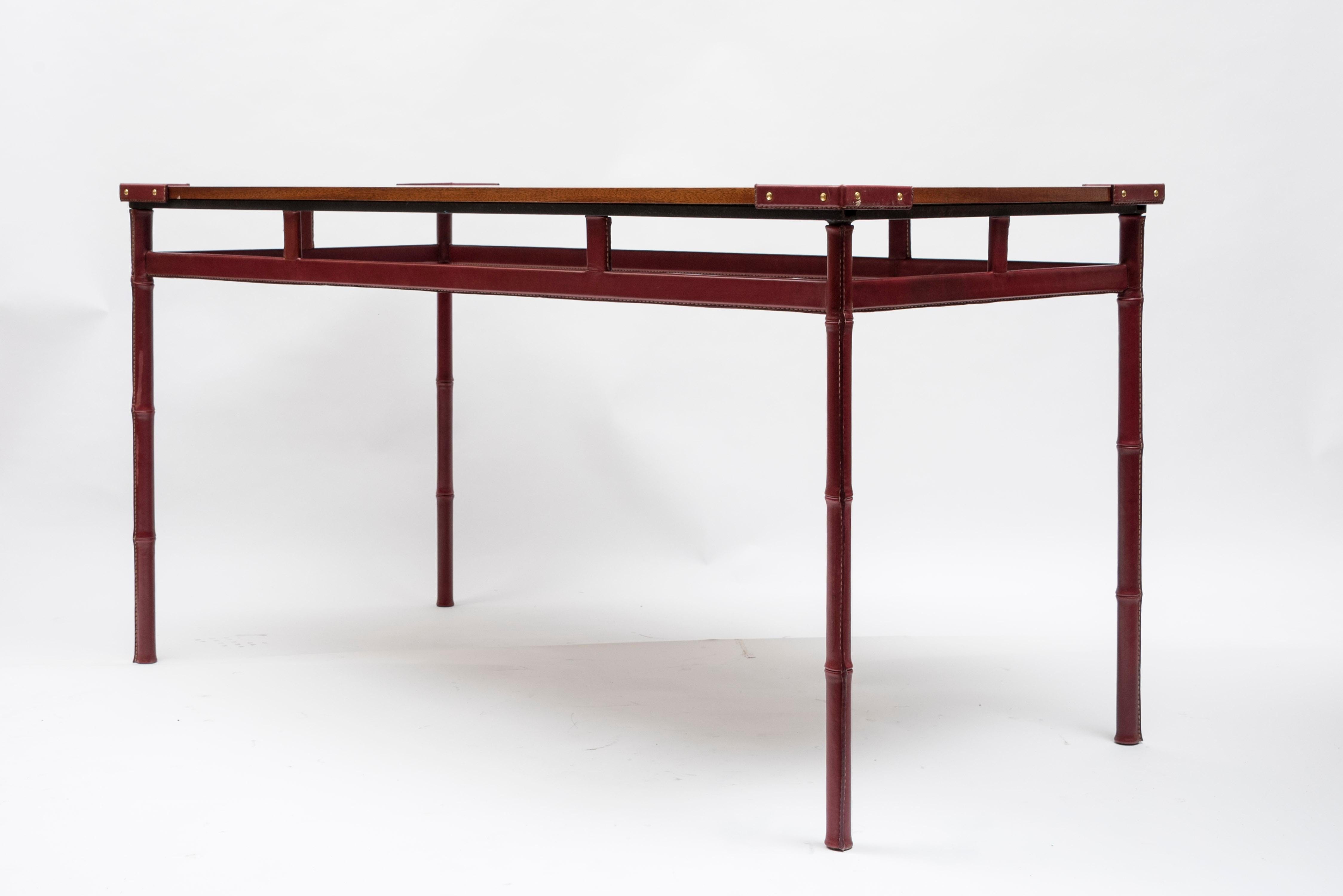
Then, in the late 1940s, Hermès came. The collaboration that followed produced the pieces Adnet is best known for today, slender metal frames wrapped entirely in stitched saddle leather, the kind of hand stitching that takes time. Chairs, desks, lamps, bar carts, luggage stands. What was remarkable about these pieces was how completely they belonged to both worlds simultaneously. They had the rigour of modernist furniture and the sensibility of a maison de mode, the feeling that someone had thought carefully not just about the object but about how it would feel to live alongside it. Adnet had essentially brought a couturier’s eye to furniture, and the result was something that neither discipline had produced on its own.
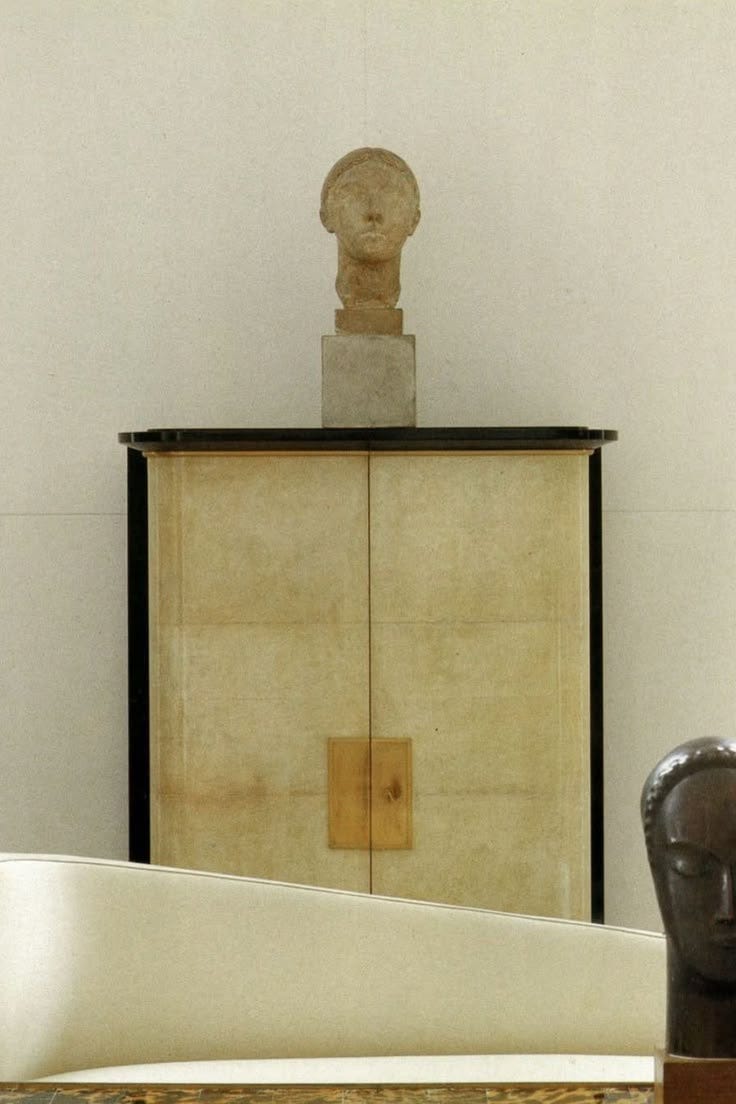
What feels relevant about Adnet now is precisely his in-between quality. He sits outside the familiar mid-century categories. He is neither the Scandinavian functionalists nor the Italian postwar optimists nor the American modernists, which means he travels differently. That, more than any specific detail, is what a good room needs.
AE X